
Every field, typed. Every field, scored.
An OCR hands you a string and wishes you luck. Gemina returns headers, line items and your own schemas as JSON your code can trust — with confidence on every value.

It tells you what it isn't sure about.
A single model call returns a confident answer whether or not it is right. Gemina scores each field so your review queue routes itself.
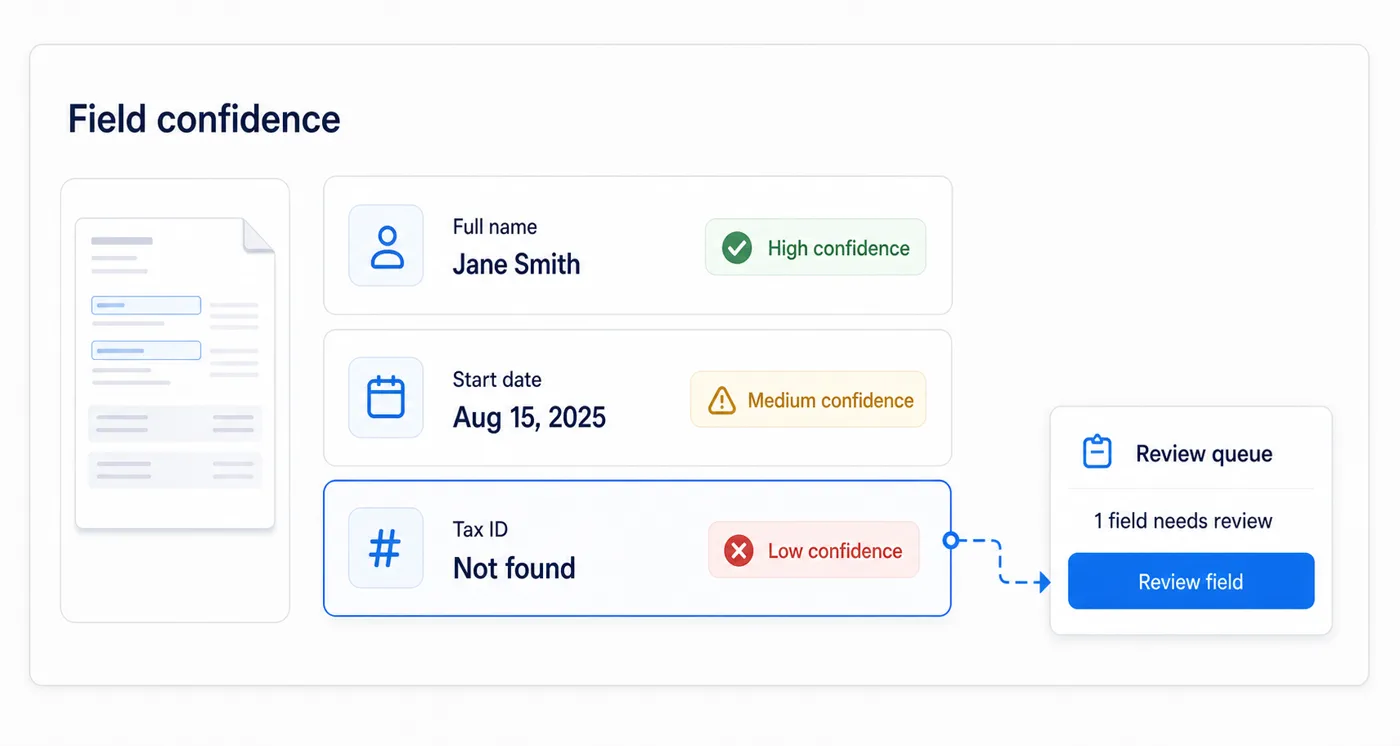
Per field, not per document
High, medium or low on every value — so one doubtful line item doesn't discredit the whole extraction.
It refuses to guess
A field that isn't there comes back empty and flagged, not filled in with something plausible.
Corrections feed back
Submit verified values for an extraction and get a per-field comparison of what was right, wrong or missed.
When accuracy matters, put a person in the loop.
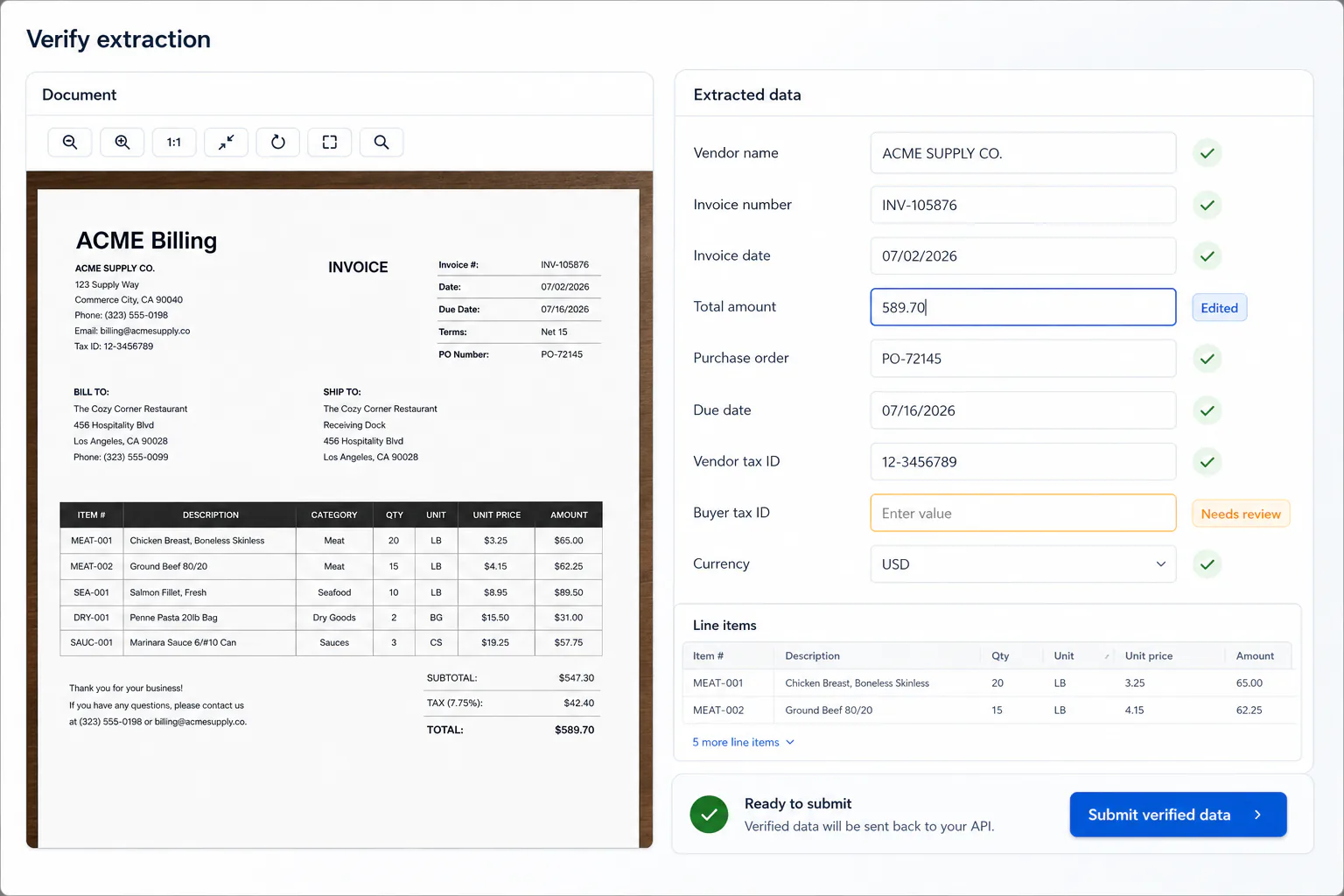
Drop a complete review step into your product. Your user sees the source document beside every extracted value, corrects only what needs attention, and sends the audited result straight back to Gemina.
- 01Route attention
Hide high-confidence fields so reviewers focus on uncertainty.
- 02Correct in place
Edit typed fields, add missing values or fix whole table rows.
- 03Submit once
The verified payload is stored with the original extraction.
- 04Keep your schema
verifiedValueshas the same shape asvalues.
Document viewer, field controls, table editing, validation, confidence filters and submission logic — already built.
See the drop-in componentYour schema, built from one sample.
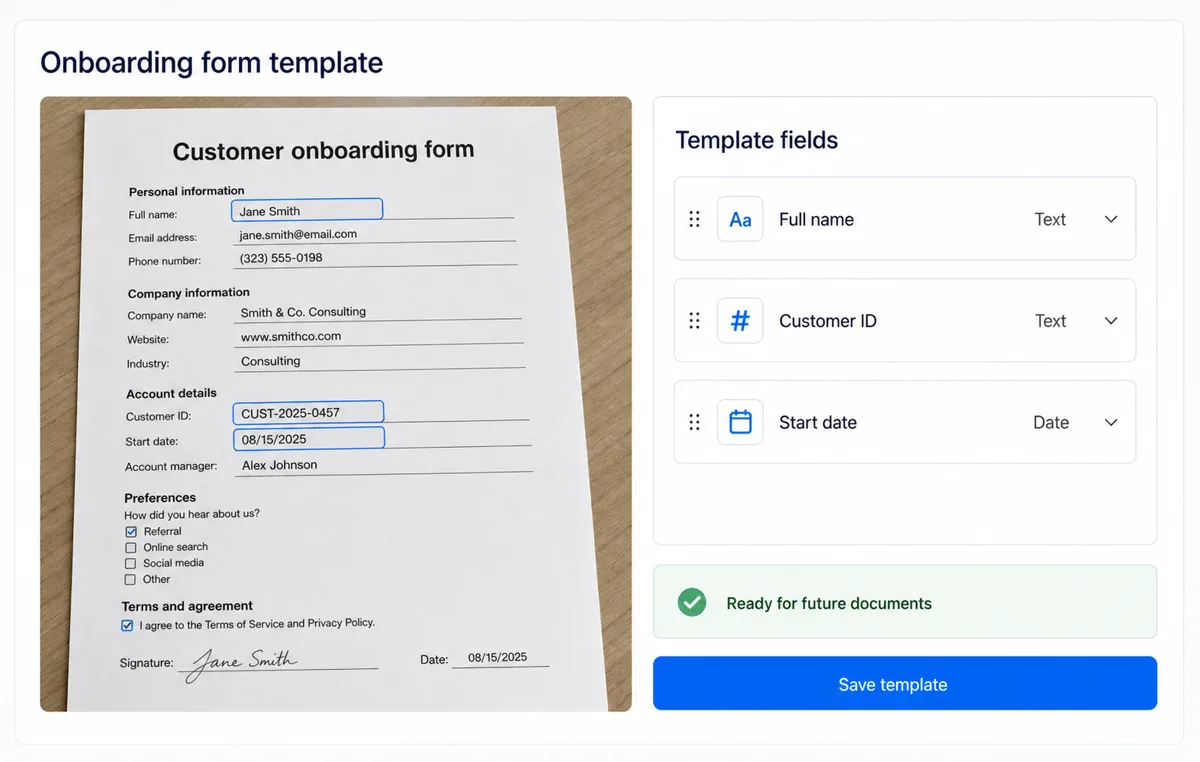
Upload one example, mark the fields you want, and every document of that type afterwards returns the same shape. No labelled training set, no model to fine-tune, no waiting.
Pass the template ID on the call and you get that shape back. Variations of the same document type still land in it, so a vendor redesigning their layout doesn't break your integration.
The schema is yours — editable, exportable, and searchable and filterable alongside everything else you extract.
Line items are where OCRs give up.
Ten years of invoices taught us the hard part isn't the total. It's the twenty rows above it.
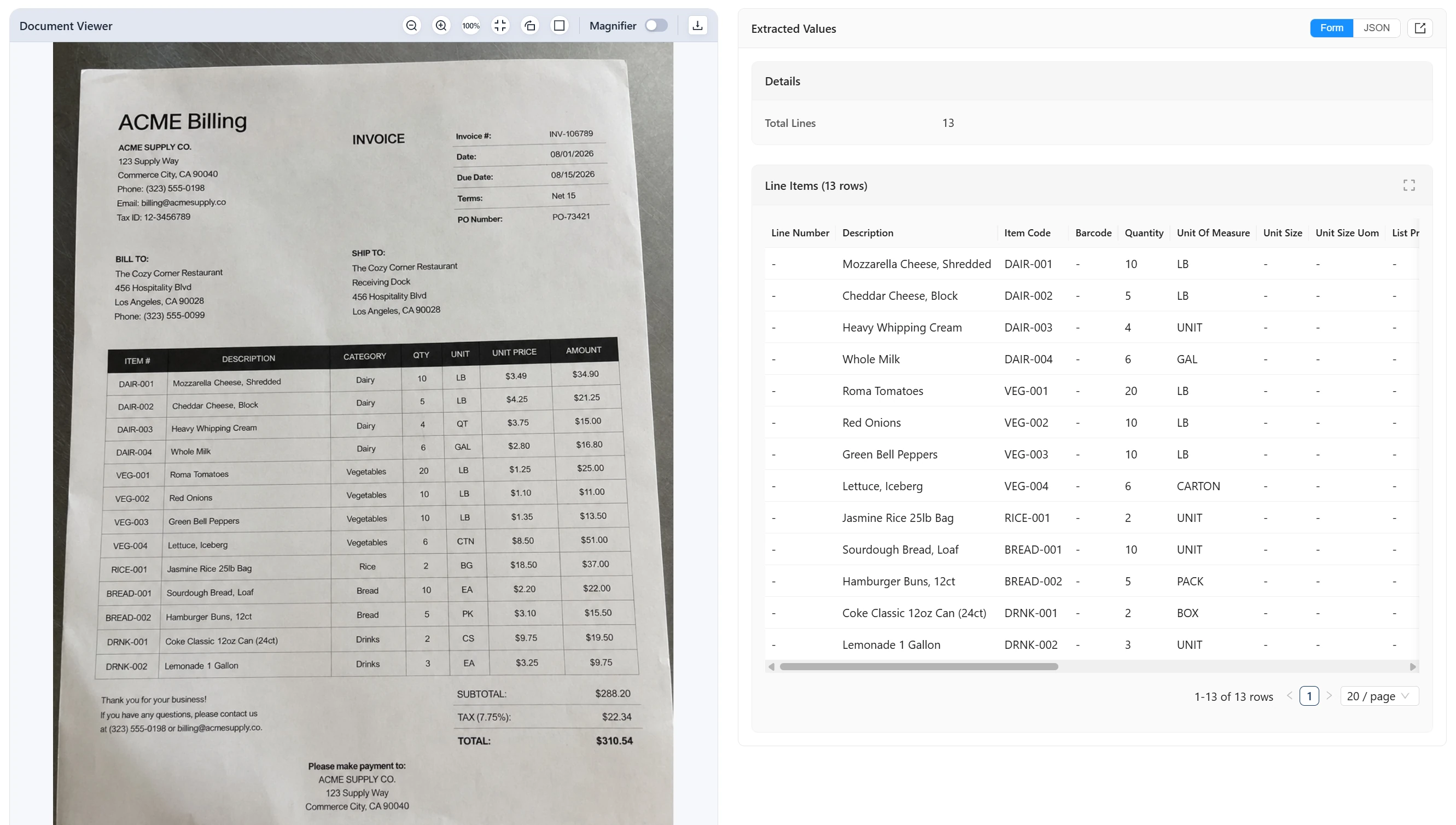
Every column above is a field you can filter and search on — not a cell in a picture of a table.
Trade accuracy for speed, per call.
One parameter. No separate endpoints, no separate contracts.
- InvictusHighest accuracy
- Complex or multi-language documents. Costs the most credits.
- PraetorianBalanced
- The recommended default for most work.
- VeloxFastest
- High volumes of straightforward documents. Header extraction starts from 4–6 seconds.
Optional passes — thinking, evaluation, correction and coordinate output — trade more time for more accuracy on hard documents.
See it on your own document.
Full API access, all models included. No credit card required.